Introduction
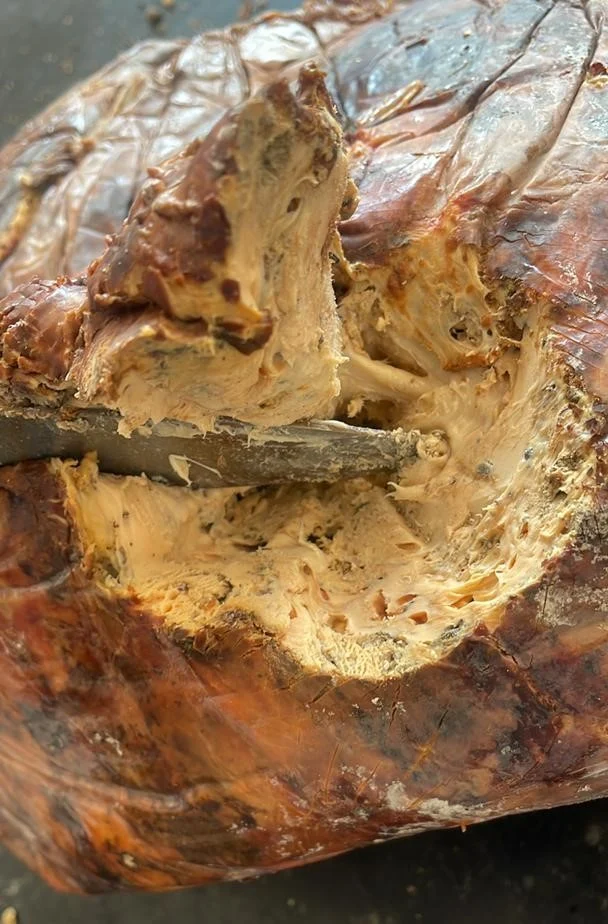
Asafoetida, also known as Hing or Hadda and scientifically as Ferula foetida L., is a naturally occurring resin with centuries of culinary and medicinal importance. While India is the largest importer and consumer of Asafoetida globally, Iran and Afghanistan remain the primary producers. Iranian Asafoetida is particularly valued for its purity, consistent aroma profile, and traceable harvesting methods.In recent years, global trade dynamics for Asafoetida have shifted considerably. From 2023 to 2025, Iran implemented stricter harvesting and export regulations to protect its wild populations, South Khorasan experienced severe droughts, and Afghanistan increasingly relied on Iranian resin to meet the growing demand of the Indian market. This article provides a comprehensive, data-driven overview of production, trade, sustainability, and market trends, offering international importers and researchers a trustworthy reference.
Botanical Background and Ecology
In Iran, production is concentrated in the Khorasan region. Historically, South Khorasan was the core area, but repeated droughts between 2020 and 2024 significantly reduced plant growth, leading to temporary bans on harvesting in certain districts. Tabas and Boshruyeh regions have experienced overharvesting, often involving uprooting of plants, locally referred to as “killed harvests,” which damage the ecosystem and reduce long-term yields. Today, Kashmar has emerged as a more reliable source, supplying much of Iran’s legal exports due to reduced yields elsewhere.
Iran’s regulatory framework enforces sustainable tapping practices to ensure long-term plant regeneration. Such measures position Iranian Asafoetida as a stable and environmentally responsible source.
Production in Iran and Afghanistan
Iran and Afghanistan contribute differently to the global supply of Asafoetida. In Iran, harvesting is controlled, supervised, and restricted during adverse ecological conditions. The Ministry of Agriculture enforces strict permitting, encouraging sustainable tapping and transitioning toward cultivated production. These practices maintain higher purity and quality, which are crucial for international buyers.
Afghanistan, while historically a significant producer, suffers from overharvesting, unregulated extraction, and inconsistent quality. Many Indian importers have reported that a substantial portion of Afghan-labeled Asafoetida is actually sourced from Iran and re-exported. The lack of regulatory oversight in Afghanistan also leads to the addition of fillers and adulterants to increase shipment weight or compensate for lower-quality resin.
Quality Comparison: Iran vs. Afghanistan
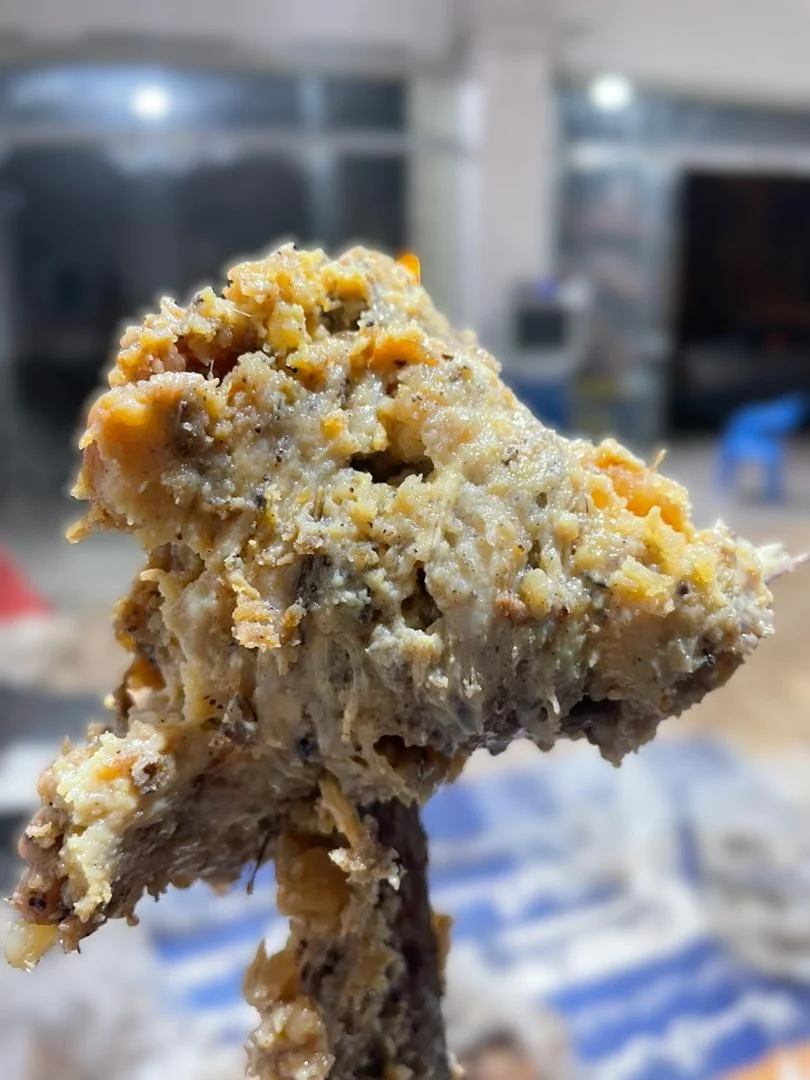
Iranian asafoetida (hing) plants from Kashmar region
Iranian Asafoetida stands out in several key areas. Due to careful harvesting and monitoring, Iranian resin maintains high purity, minimal contaminants, and a consistent aroma. The sulfurous compounds responsible for its characteristic aroma are stronger and more stable compared to Afghan resin. In contrast, Afghan Asafoetida frequently contains fillers such as chickpea flour, dust, or other plant gums, and additional moisture is sometimes added to increase shipment volume. Such adulteration reduces both the quality and price of the product in India.
Official trade data further illustrate the dependency of Afghanistan on Iranian supply. In 2023, Afghanistan imported 30 tons of Iranian Asafoetida, highlighting that Afghanistan alone cannot meet the Indian market’s demand without Iranian material.
Iranian Export Regulations and Market Impact
1. Export Classification System
All medicinal plants are categorized under the frameworks of “Prohibited,” “Conditional Permission,” and “Agricultural.” Accordingly, exporters are required to obtain special permits for exporting these products.
2. Harvest Bans in South Khorasan
Drought conditions and insufficient plant growth led to temporary prohibitions on tapping wild populations.
3. Controlled Cultivation Programs
The government promoted transitioning from wild-harvested to cultivated Asafoetida to ensure sustainability.
4. Regional Competition
Afghan markets offer lower-cost resin, often adulterated, exerting downward pressure on regional prices.
5. Low Value-Added Exports
The majority of Iranian Asafoetida is exported in raw form, which makes the trade volume sensitive to changes in supply and regulatory enforcement.
Official Export Data: HS Code 13019020
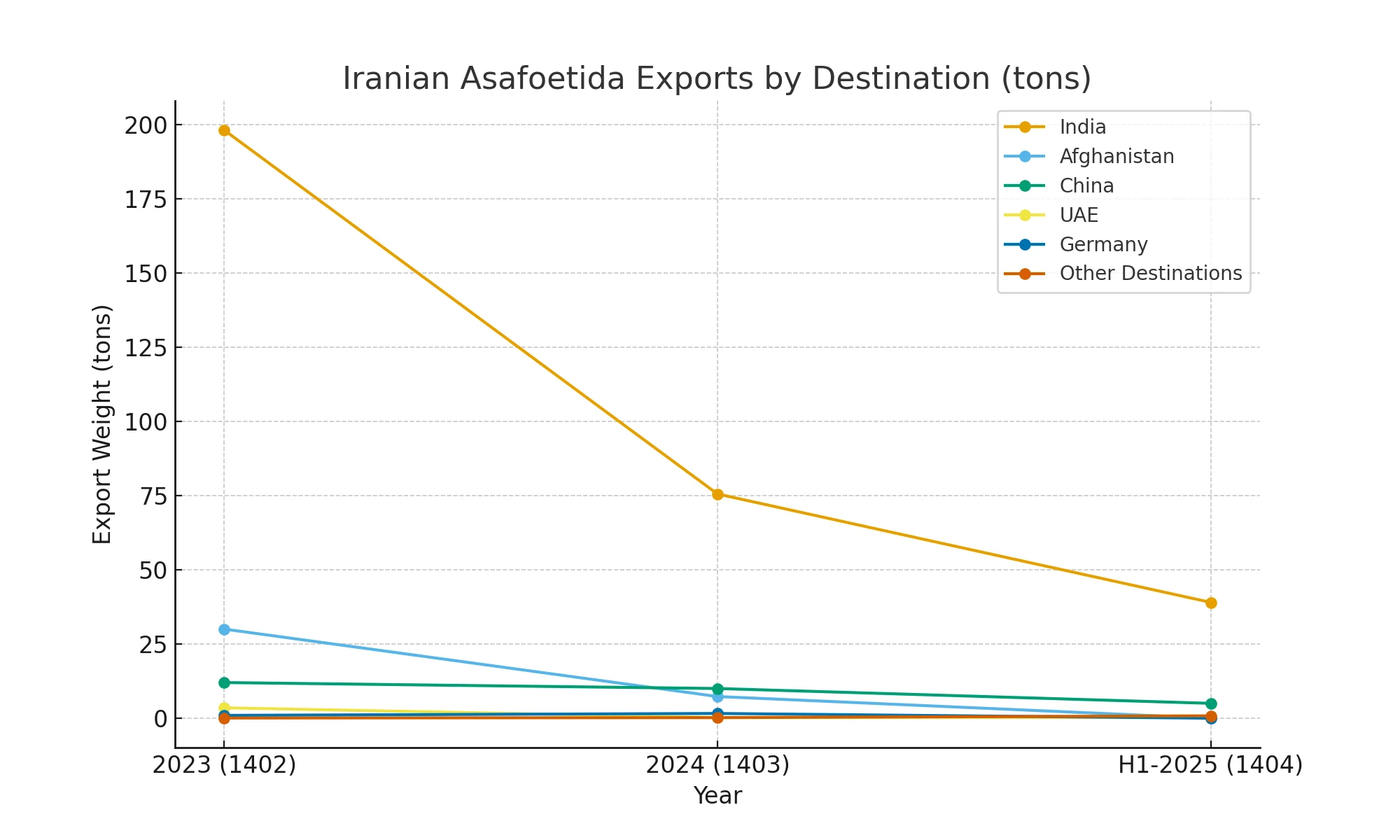
2023
| Number of imported shipments | Destination Shipments Weight (tons) | country |
| 6 | 198 | India |
| 3 | 30 | Afghanistan |
| 3 | 12 | China |
| 2 | 3.5 | UAE |
| 1 | 955kg | Germany |
| 1 | 60kg | Turkey |
Total value: USD 3,325,923
2024
| Number of imported shipments | Destination Shipments Weight (tons) | country |
| 6 | 75.5 | India |
| 1 | 10 | China |
| 2 | 7.3 | Afghanistan |
| 1 | 1.6 | Germany |
| 1 | 225kg | UAE |
| 1 | 200kg | Jordan |
Total value: USD 2,255,640
2025
| Number of imported shipments | Destination Shipments Weight (tons) | country |
| 4 | 39 | India |
| 2 | 5 | China |
| 1 | 800kg | Austria |
| 1 | 351kg | UAE |
Total value: USD 610,347
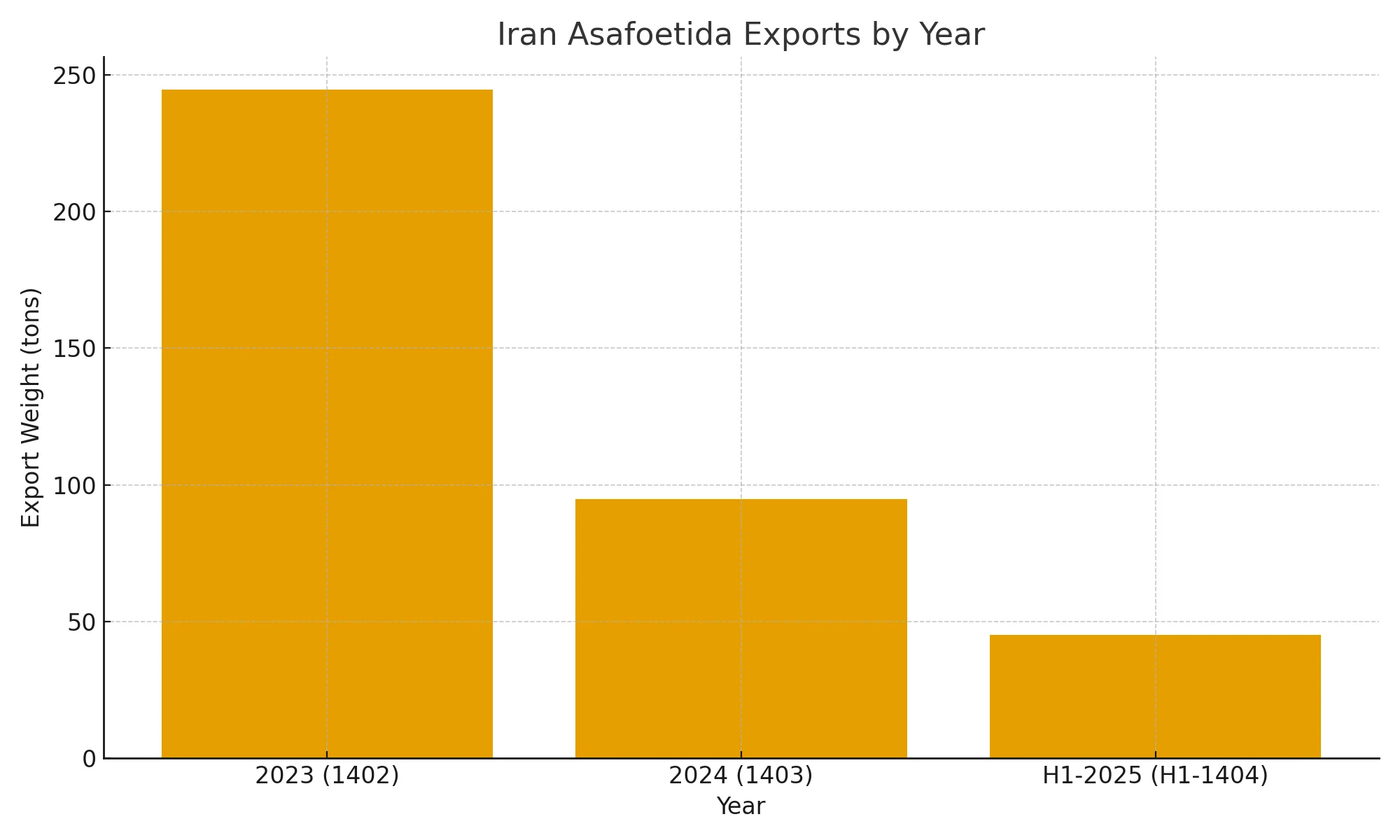
Export Trend Chart
The data indicates a clear downward trend in volumes from 2023 to early 2025, resulting from stricter Iranian regulations, environmental pressures, and competition from Afghanistan’s informal supply chains
Trade Routes: Legal and Informal Flows
The official export route runs through Bandar Abbas, Iran, with proper documentation for international buyers. However, due to strict Iranian controls and high Indian demand, a significant portion of Iranian Asafoetida is smuggled through Afghanistan to India. This practice allows Afghan traders to supply the Indian market at lower prices by blending or adulterating the resin. Consequently, India often receives Iranian-origin resin indirectly, which maintains Afghanistan’s market share but at the cost of reduced quality.
Market Outlook (2025–2030)
Global demand for natural, plant-based ingredients continues to rise, particularly in food, pharmaceuticals, and flavoring industries. Despite decreasing export volumes, Iran remains the most reliable source for high-quality Asafoetida. The future will likely see:
• Expansion of cultivated Asafoetida programs
• Greater use of traceability and COA documentation
• Potential for higher value-added exports
• Increased scrutiny on Afghan imports and adulteration practices
Safe Sourcing Guidelines
Importers and distributors are advised to:
• Request Certificates of Analysis (COA) and origin certificates
• Inspect moisture content and physical appearance
• Verify traceability of batches to known Iranian collectors
• Prefer legally licensed Iranian suppliers to avoid adulterated or smuggled material
Conclusion
Iranian Asafoetida distinguishes itself through sustainability, high purity, and aroma strength. Regulatory frameworks and environmental measures, while temporarily reducing volumes, safeguard the long-term viability of the species. Afghan resin, though abundant, is frequently adulterated and reliant on Iranian supply for major markets like India. Therefore, Iran continues to be the primary and most reliable source for international buyers seeking authentic, high-quality Asafoetida.
For verified quotes, Certificates of Analysis, sustainability documentation, and export availability, get in touch with us
We provide traceable, fully documented shipments directly from licensed Iranian collectors and processors.
References
1. Donya-e-Eqtesad (2024). Iran’s Medicinal Plant Export Regulations
2. IRNA – Islamic Republic News Agency (2024). Controlled Cultivation Programs for Asafoetida
3. Khabarban News Agency (2023). Environmental and Harvesting Reports, South Khorasan
4. Mehr News (2024). Asafoetida Cultivation Programs
5. Afghan Voice Agency (AVA Press, 2024). Afghan Asafoetida Market and Adulteration Practices
6. Khabar Online (2024). Export Trends and Market Analysis for Raw Gums and Resins
7. Iran Customs (2023–2025). Official Export Data, HS Code 13019020